🔥 Fire Safety Insights
Small System.
Fast Response.
Serious Fire Protection.

In critical environments, a fire does not need minutes to cause serious damage. A small electrical fault inside a control panel, battery enclosure, server cabinet, or industrial machine can quickly develop into equipment damage, operational downtime, and costly disruption.

⚡ Fast-Acting📦 Compact🎯 Localized Protection
This is where aerosol fire suppression systems offer a different approach to fire protection.

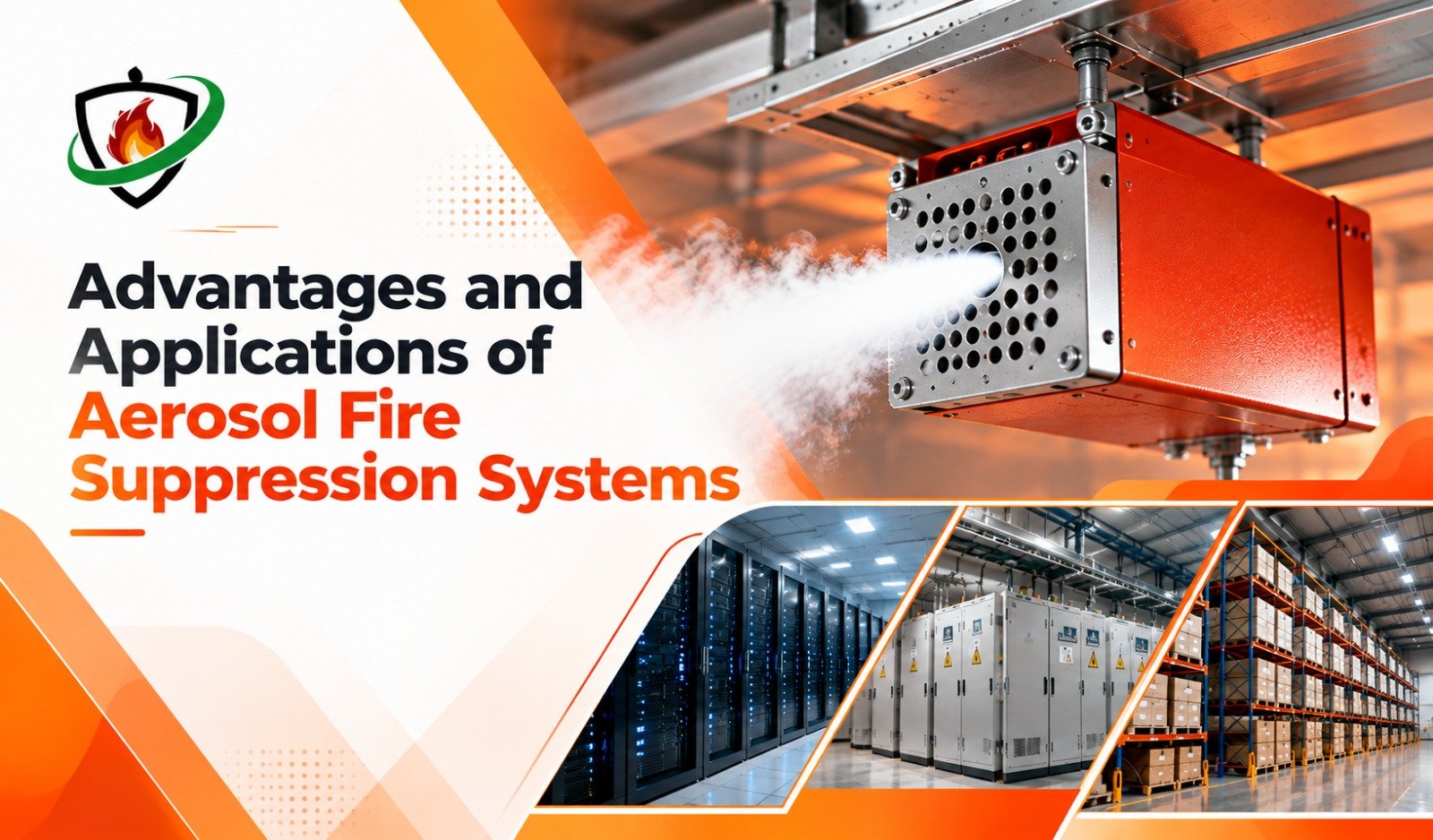
Compact, fast-acting, and designed for localized protection, aerosol systems can suppress developing fires without the extensive piping and large storage cylinders associated with many conventional suppression systems.

From electrical panels and industrial automation systems to telecommunications equipment and selected energy-storage applications, aerosol fire suppression is increasingly considered where space, speed, and equipment protection matter.

The Technology

What Is an Aerosol Fire Suppression System?


An aerosol fire suppression system uses specially formulated compounds to generate extremely fine fire-suppressing particles.

When the system activates, these particles disperse through the protected enclosure and interfere with the chemical reactions that allow combustion to continue.

Instead of relying primarily on cooling the fire with water, aerosol technology acts directly on the combustion process.

The result is a compact suppression solution particularly suited to appropriately designed enclosed and localized applications.
System Components
A typical system can include:
🧪Aerosol generators
🔍Automatic fire detection
🎛️Control and releasing panels
🔔Alarm and warning devices
✋Manual activation controls
📡Monitoring and system interfaces

The exact design should always be based on the protected hazard, enclosure, equipment, operating conditions, and applicable fire safety requirements.

6 Key Advantages

Why Aerosol Fire Suppression Stands Out

 
01
1

Fire Suppression When Every Second Matters

Fire can escalate quickly inside an electrical cabinet or equipment enclosure.

When integrated with an appropriate detection system, aerosol suppression can respond during the early stages of a developing fire.

Early intervention can help:
✓Restrict fire development
✓Reduce damage to equipment
✓Limit fire spread
✓Minimize operational interruption
✓Protect nearby critical systems

For high-value equipment, controlling a fire early can make a significant difference to the overall impact of an incident.

02
2

Powerful Protection in a Compact Footprint

Not every facility has space for large cylinders, storage areas, or complex suppression infrastructure.

Aerosol generators are compact and can be positioned close to the hazard they are designed to protect.

This makes them particularly interesting for space-constrained environments such as:
✓Electrical panels
✓Control cabinets
✓Telecommunications enclosures
✓Machinery compartments
✓Automation systems
✓Technical equipment rooms

When every centimetre of usable space matters, compact fire protection can be a major advantage.

03
3

Less Piping. Simpler Integration.

Traditional centralized suppression systems can require storage cylinders, distribution piping, and multiple discharge nozzles.

Many aerosol configurations can reduce the need for this extensive infrastructure because the generators are installed directly within or near the protected enclosure.

Depending on the application, this can mean:
✓Less piping
✓Less installation complexity
✓Less space required
✓Easier retrofit integration

For existing industrial facilities, this flexibility can be especially valuable when major infrastructure modifications are difficult.

04
4

Designed for Critical Electrical Environments

Electrical systems are often both a potential ignition source and a critical part of facility operations.

Aerosol suppression can be considered for appropriately engineered protection of:
✓Electrical panels
✓Switchgear enclosures
✓UPS equipment
✓Control cabinets
✓Automation systems
✓Power distribution equipment
✓Telecommunications electronics

Localized suppression can help address a developing fire close to its source before it affects surrounding systems.

05
5

Lower System Complexity

Fire protection should remain dependable even after long periods without activation.

The relatively compact and self-contained nature of aerosol generators can simplify certain aspects of installation and maintenance compared with more infrastructure-heavy suppression arrangements.

Periodic inspection remains essential.

Detection equipment, generators, control systems, alarms, electrical connections, and activation devices should all be checked according to the manufacturer’s recommendations and applicable fire safety requirements.

06
6

Easier Protection for Existing Equipment

Retrofitting fire suppression into an operational facility can be challenging.

There may be limited room for new piping, major construction work may interrupt operations, and existing equipment layouts may restrict installation options.

The compact nature of aerosol technology can make it suitable for selected retrofit applications.

This allows fire protection to be considered closer to individual hazards rather than requiring extensive modifications throughout the facility.

Applications

Where Can Aerosol Fire Suppression Systems Be Used?


One of the strengths of aerosol technology is its ability to address different types of specialized fire risks.

⚡

Electrical Panels & Control Cabinets

A small electrical fault can become a major operational problem. Aerosol suppression can provide localized protection within suitable electrical enclosures, helping control a developing fire before it spreads beyond the cabinet.

🔋

Battery Energy Storage Systems (BESS)

Energy storage is becoming increasingly important across renewable energy and industrial applications. At the same time, battery installations introduce complex fire and thermal risks. Depending on the battery technology, enclosure design, risk assessment, and applicable requirements, aerosol suppression may be considered as one component within a broader BESS fire protection strategy.

🏭

Industrial Automation & Control Systems

Modern production facilities depend on PLC panels, control equipment, drives, and automated systems. Damage to one critical control cabinet can potentially interrupt a much larger production process. Localized fire suppression can therefore contribute to both equipment protection and operational resilience.

📡

Telecommunications Infrastructure

Communication networks rely on electrical and electronic equipment that may operate continuously and, in some cases, in remote or compact locations. Aerosol suppression can be considered for suitable telecommunications cabinets, communication equipment enclosures, and supporting electrical systems.

💾

Data & IT Equipment Enclosures

Critical IT infrastructure requires fire protection that considers both fire risk and equipment sensitivity. For suitable localized applications, aerosol suppression may provide additional protection for specific equipment cabinets or technical enclosures.

⚙️

Machinery & Specialized Equipment

Industrial machines often combine electrical components, control systems, motors, and other potential ignition sources within confined spaces. Compact aerosol generators can provide a practical option for selected machinery and equipment enclosures where localized suppression is required.

⚠️

Important: Battery fire safety requires specialized engineering, and no single suppression technology should be treated as a universal solution.
 
Business Continuity

From Fire Protection to Business Protection


The real cost of a fire is not always limited to the equipment that burns.

A single incident can lead to:
🛑
Production downtime
📞
Interrupted communications
🔧
Equipment replacement
🚫
Service disruption
⏳
Delayed operations
💸
Financial losses

This is why protecting critical equipment is also about protecting business continuity.

By addressing fire close to its point of origin, a properly engineered aerosol suppression system can help reduce the wider operational consequences of a fire event.

Suitability & Maintenance

Is Aerosol Fire Suppression Right for Every Application?


No single fire suppression technology is appropriate for every hazard.

📋 The suitability of aerosol suppression depends on factors such as:
✓Fire classification and identified hazards
✓Protected enclosure volume
✓Equipment configuration
✓Ventilation and openings
✓Occupancy
✓Environmental conditions
✓Detection strategy
✓Required system performance
✓Applicable codes and standards
🔧 Inspection Still Matters

Compact does not mean maintenance-free. An aerosol fire suppression system should be periodically inspected to verify that it remains ready for operation.

Important checks may include:
✓Aerosol generator condition and service life
✓Detection devices
✓Releasing control panels
✓Electrical connections
✓Alarm and warning devices
✓Manual activation controls
✓System interfaces
✓Changes within the protected enclosure

A professional fire risk assessment should determine whether aerosol suppression is appropriate and how it should integrate with the facility’s overall fire protection strategy.

Modifications to equipment, ventilation, enclosure size, or the original fire risk should trigger a review of the suppression design.

In Summary

Compact Technology. Critical Protection.


Modern facilities are becoming more connected, automated, electrified, and space-efficient. Fire protection must evolve alongside them.

Aerosol fire suppression systems combine rapid response, compact installation, localized protection, and flexible integration, making them a valuable option for many specialized fire risks.

When correctly selected and engineered, aerosol technology can help protect critical equipment, limit fire development, and reduce the operational impact of fire.


🛡️

Aerosol Fire Suppression Solutions from MAS Fire Safety & ESG Services

MAS Fire Safety & ESG Services provides fire protection solutions for industrial, commercial, electrical, and critical infrastructure applications.

From electrical panels and automation equipment to telecommunications infrastructure and specialized industrial environments, our team can assess the fire risk and recommend an appropriate protection strategy for your facility.

Protect the equipment that keeps your operations moving.

Contact MAS Fire Safety & ESG Services to discuss the right aerosol fire suppression solution for your application.

Contact Us Today →

FAQ

Frequently Asked Questions

 
❯  How does an aerosol fire suppression system work?
An aerosol system generates fine fire-suppressing particles that disperse through the protected enclosure and interfere with the chemical reactions that sustain combustion.
❯  What is the main advantage of aerosol fire suppression?
Its key advantages can include rapid activation, compact installation, reduced distribution piping, and suitability for selected localized electrical and equipment-protection applications.
❯  Where are aerosol fire suppression systems commonly used?
They can be considered for electrical panels, control cabinets, industrial automation equipment, telecommunications systems, machinery enclosures, selected energy-storage applications, and other specialized enclosed environments.
❯  Can aerosol systems protect electrical equipment?
They can be used in appropriately engineered electrical applications. The suitability and design should be determined according to the specific equipment, enclosure, fire hazard, and applicable requirements.
❯  Do aerosol fire suppression systems require maintenance?
Yes. Generators, detection systems, releasing controls, alarms, electrical connections, and the protected enclosure should be periodically inspected according to manufacturer instructions and applicable requirements.

Leave A Comment

Contact Us

Call: +91 80955-04330
Office : 04344-457999
Mail: info@masfiresafetyesg.com

location