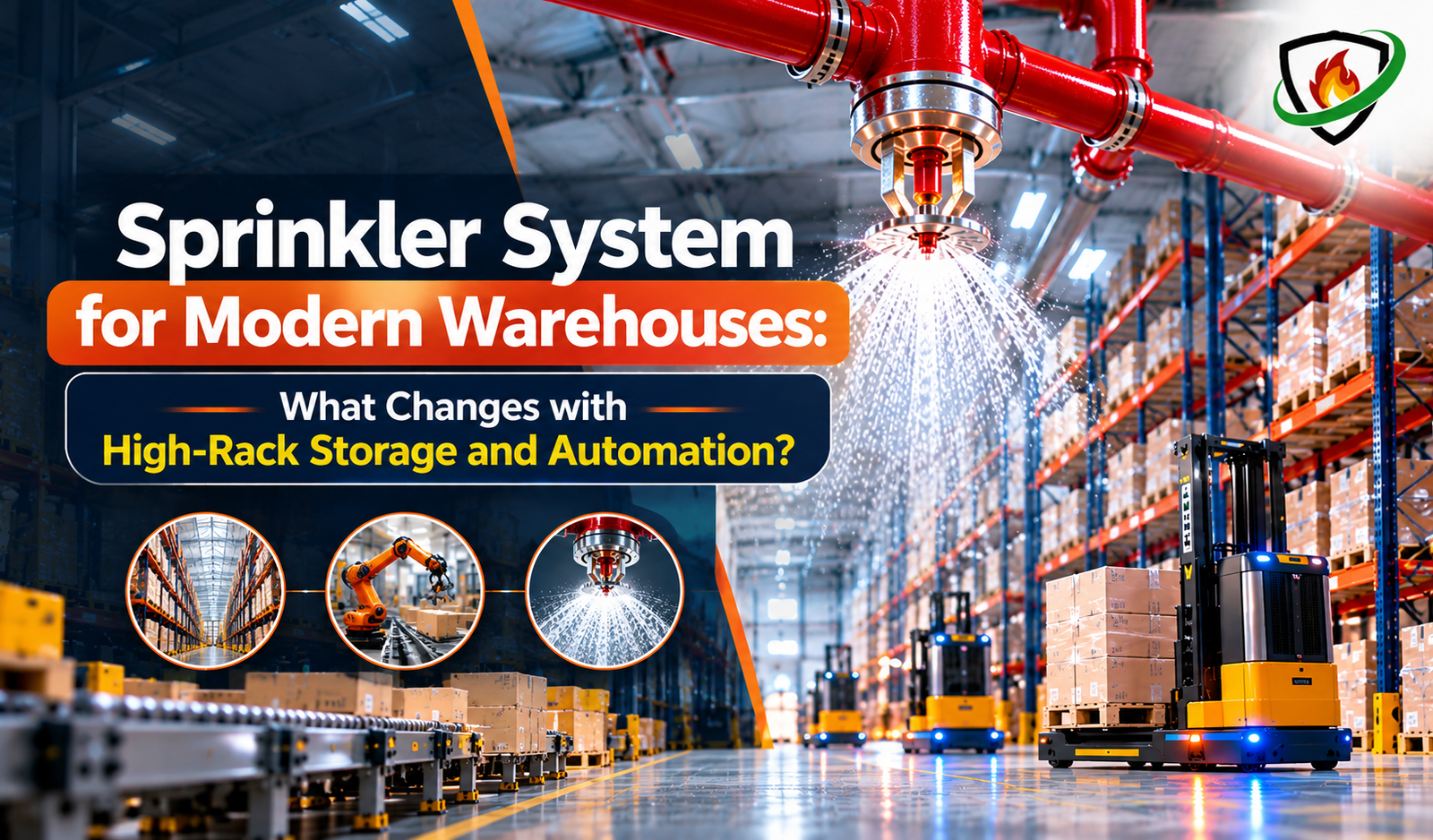
- Modern warehouses are evolving rapidly. High-rack storage, automated material handling systems, robotics, and densely packed inventory help businesses improve efficiency and maximize available space. However, these changes can also introduce new challenges for warehouse fire safety.
A conventional fire sprinkler system designed for a traditional warehouse may not always provide the appropriate level of protection for modern high-rack or automated storage environments. Storage height, commodity type, rack configuration, ceiling height, obstructions, and automated equipment can all influence how a warehouse sprinkler system needs to be designed.
Understanding these factors is essential when planning an effective warehouse fire protection system.
Why High-Rack Storage Changes Warehouse Fire Protection
High-rack storage allows warehouses to use vertical space efficiently and store significantly more material within the same floor area.
From a fire protection perspective, however, increased storage height can affect fire growth and sprinkler effectiveness.
A fire originating at a lower rack level may spread vertically through stored materials and open spaces between racks. As the fire develops, controlling it from ceiling-level sprinklers can become more challenging depending on the storage configuration and commodities involved.
An effective fire sprinkler system for warehouses therefore needs to consider factors such as:
- Storage and ceiling height
- Type of goods being stored
- Packaging materials
- Rack arrangement
- Aisle width
- Horizontal and vertical flue spaces
- Potential sprinkler obstructions
- Building configuration
- Applicable fire protection standards
Sprinkler protection should therefore be selected according to the actual warehouse risk rather than using the same design approach for every facility.
The Role of ESFR Sprinkler Systems
ESFR sprinkler systems (Early Suppression Fast Response) are commonly associated with warehouse and high-piled storage applications.
ESFR sprinklers are designed to respond quickly and deliver significant quantities of water to help suppress certain types of developing fires.
Depending on the warehouse configuration and applicable design criteria, an ESFR sprinkler system may provide an effective ceiling-level protection strategy.
However, ESFR sprinklers are not automatically suitable for every high-rack warehouse.
Factors including storage height, ceiling height, commodity classification, rack arrangement and obstructions must be evaluated before determining the appropriate sprinkler solution.
When Are In-Rack Sprinklers Required?
For certain storage configurations, ceiling sprinklers alone may not provide the required protection.
In-rack sprinkler systems place sprinkler protection within the storage racks themselves. This allows water to reach a developing fire closer to its source rather than relying entirely on ceiling-level sprinklers.
In-rack sprinklers may be considered depending on factors such as:
Very high storage arrangements
Rack configuration
Type of stored commodity
Ceiling height
Storage density
Applicable design standards
The decision between ceiling-only protection, ESFR sprinklers, in-rack sprinklers or a combination of systems requires proper fire protection engineering and hazard assessment.
Automation Creates New Fire Safety Challenges
Automation is transforming warehouse operations.
Modern facilities increasingly use automated storage and retrieval systems (AS/RS), conveyors, robotics, battery-powered equipment and other automated technologies.
While these systems can improve productivity, they can also change the warehouse’s fire-risk profile.
Obstructions to Sprinkler Discharge
Conveyors, robotic equipment, platforms and storage structures can potentially obstruct sprinkler discharge.
Sprinklers need an appropriate discharge pattern to control or suppress a fire effectively. Therefore, equipment layout should be considered during warehouse fire sprinkler system design.
Dense Storage Configurations
Automated warehouses can store products more densely than traditional facilities.
Dense storage may create concealed areas where fire can develop and spread before ceiling-level sprinklers operate.
This makes the coordination between warehouse layout and fire protection system design particularly important.
Electrical and Battery Risks
Automated warehouses often contain electrical equipment, control panels, charging stations and battery-powered material-handling systems.
These hazards may require additional fire-risk assessment alongside the primary sprinkler protection strategy.
Key Factors in Warehouse Sprinkler System Design
There is no universal sprinkler design suitable for every warehouse.
A professional assessment should consider the complete storage and building environment.
1. Commodity Classification
What is being stored?
The fire characteristics of metal products can be significantly different from those of plastics, cartons, rubber products or other combustible materials.
Commodity classification can therefore have a major impact on sprinkler design.
2. Storage Height
As storage height increases, fire behaviour and sprinkler protection requirements can change.
Both the maximum storage height and ceiling height should be accurately evaluated.
3. Rack Configuration
Single-row, double-row and multiple-row rack configurations can create different fire-spread conditions.
Rack dimensions, shelving and flue spaces should be considered when designing the warehouse sprinkler system.
4. Water Supply
A sprinkler system is only effective when supported by an adequate water supply.
Design considerations can include required water flow, pressure, fire pumps, storage tanks and hydraulic calculations.
5. Obstructions
Lighting, ducts, conveyors, structural members and automated machinery can potentially interfere with sprinkler discharge.
These elements should be identified during system planning.
6. Applicable Standards
Warehouse sprinkler protection should be designed according to applicable codes, standards and local authority requirements.
Standards such as NFPA 13 provide detailed criteria for sprinkler system installation and various storage arrangements. The exact requirements depend on the facility, commodities, storage configuration and applicable jurisdiction.
Why Regular Inspection and Maintenance Matter
Installing an automatic fire sprinkler system is only one part of warehouse fire protection.
As warehouse operations evolve, storage arrangements and equipment layouts can change. New racks may be installed, storage heights may increase, different products may be introduced, or automation equipment may be added.
These changes can affect the assumptions used in the original fire protection design.
Periodic inspection and professional review can help identify whether the existing sprinkler system remains appropriate for the current warehouse configuration.
Routine maintenance can also help identify issues involving sprinkler heads, valves, piping, pumps and other critical fire protection equipment.
Building a Safer Modern Warehouse
Modern warehouses require fire protection strategies that evolve alongside storage and automation technologies.
High-rack storage, dense inventory and automated systems should be considered during the planning and design of a warehouse fire sprinkler system.
A well-planned solution may involve ceiling sprinklers, ESFR sprinklers, in-rack sprinklers, fire detection systems and other protection measures depending on the specific risks present within the facility.
Professional assessment is essential because every warehouse has a different combination of building dimensions, storage arrangements, commodities and operational risks.
Need a Fire Sprinkler System for Your Warehouse?
MAS Fire Safety & ESG Services provides fire safety solutions for industrial, commercial and warehouse facilities.
From evaluating warehouse fire risks to planning suitable fire sprinkler systems and fire protection solutions, our team can help businesses develop protection strategies based on their facility requirements and applicable standards.
Contact MAS Fire Safety & ESG Services to discuss fire protection requirements for your warehouse, high-rack storage facility or automated industrial environment.


Leave A Comment